The useful part first
Key takeaways
- Rodding is best for clearing a main-line blockage, not fixing a broken sewer pipe.
- Multiple backed-up fixtures point to a shared line issue more than a single drain clog.
- If wastewater is actively backing up, stop using water until the line is checked.
- Sugar Grove residents with certain municipal backups may need to contact Public Works first.
When wastewater is coming up in more than one fixture, pause water use right away and do not run fixtures to recreate the problem. That keeps the backup from spreading while you figure out whether the issue sits on the private line or needs a municipal report first.
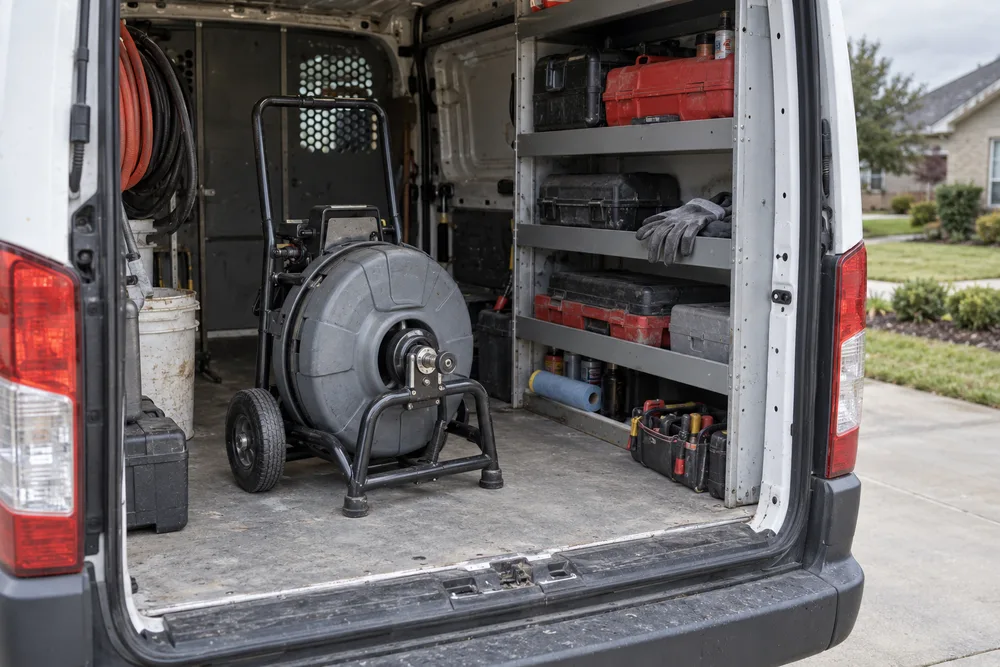
Sewer rodding is a mechanical cleaning method for a blocked main line. It can break through paper, sludge, and some soft obstructions, but it does not repair a cracked pipe or guarantee the blockage will stay gone if roots, buildup, or a damaged section is still there.
In Sugar Grove, the first call can depend on where the property sits and how the problem presents. Fox Metro’s basement-backup guidance points residents within municipal boundaries to contact Public Works first for certain sewer backups, while private-line cleaning still runs through a contractor referral.
If you want a contractor to clear the line, inspect access, and explain what was found, start with the emergency page when the backup is active, or review how referrals work if you’re trying to understand the handoff before you book.
What sewer rodding does, and what it does not
Sewer rodding uses a flexible cable with a cutting or clearing head to work through the blockage from an access point. The goal is to reopen the line so wastewater can move again and the contractor can judge whether the obstruction was a one-time clog or part of a larger condition.
It is a clearing method, not a repair method. If the line has a structural break, sag, offset, or heavy root intrusion, rodding may restore flow for now but leave the underlying problem in place.
That difference matters because the visible symptom is often the same: water backing up where it should drain. A busy homeowner usually wants the line moving again first, then a clear explanation of whether cleaning alone makes sense or whether more checking is needed.
- Good fit: soft blockage, sludge, toilet paper buildup, or minor root obstruction.
- Limited fit: repeated backup with the same symptom after recent cleaning.
- Not a fix for: broken pipe, settled pipe, or a missing section of line.
- Often paired with: camera inspection when the cause is unclear or the issue keeps returning.
A simple way to think about the decision
For example, suppose a basement floor drain and a laundry standpipe both start backing up during normal use. That points to a shared downstream problem, so mechanical sewer cleaning is a reasonable next step. If the problem returns after cleaning, the contractor may recommend inspection to see whether roots, buildup, or a damaged section is involved.
What to do before help arrives
If wastewater is backing up, the safest move is to stop adding water to the system. Do not flush, do not run sinks, and do not start another load of laundry just to see if the drain improves. That can send more wastewater to the same blocked point.
If the problem is only a slow drain at one fixture, you may still be dealing with a local clog rather than the main line. But if more than one fixture is affected, or if the basement floor drain is involved, treat it as a shared-line issue until a contractor confirms otherwise.
The backup guide gives a more detailed symptom checklist, but the practical rule is simple: keep water usage down until the line is checked and you know where the blockage sits.
- Stop water use during an active backup.
- Do not keep testing fixtures to reproduce the symptom.
- Note which fixtures are affected before the visit.
- Watch for outdoor cleanout access only if it is already visible and dry, not pressurized or actively backing up.
Signs that usually justify main-line cleaning
Backups at more than one drain, gurgling that appears across fixtures, or wastewater returning through a lower-level drain all make a main-line blockage more likely. Those signs are useful because they help the contractor choose the right access point and method once on site.
Water backing up now?
Pause water use and call. Emergency calls are accepted 24/7.
How Sugar Grove reporting and private-line work can differ
Fox Metro’s basement-backup guidance says residents within municipal boundaries who have sewer backups in multiple fixtures should contact the municipal Public Works department first. The same guidance also separates public mains from building service lines, which matters because a contractor can only clear the private side that the homeowner or property owner is responsible for.
That does not mean every sewer problem is a public issue. It means the location and pattern of the backup matter before anyone starts work. If the issue is on a private line, a contractor referral makes sense. If the issue is in the public system, the town or utility route may come first.
When you call, be ready to say what is backing up, where it is showing up, and whether the home is in municipal Sugar Grove or an unincorporated area. That short description helps the responder point you toward the correct next step without wasting time.
- Municipal-boundary backups may need a Public Works contact first.
- Private service lines are different from public mains.
- The fixture pattern helps decide whether the issue is local or shared.
- Address details matter because reporting can change by location.
What the contractor usually needs to know
A clear description of the symptom is better than a long guess. Mention whether the floor drain, toilet, shower, or laundry line is involved, and whether the problem began suddenly or after repeated slow drainage.
Rodding, jetting, and inspection are not the same call
Mechanical rodding is often the first move when the line is blocked and access is straightforward. Hydro jetting uses high-pressure water to scour the pipe wall more aggressively, which can help when sludge or grease buildup is the bigger problem. A camera inspection checks what the pipe looks like, but it does not clear the line by itself.
If you want a deeper look at the method differences, the rodding guide explains the mechanical clearing process, and the hydro-jetting page covers when that method may be more appropriate. The choice depends on symptoms, access, and what the contractor finds once the line is opened.
Rodding answers the immediate blockage question. Jetting answers a tougher buildup question. Inspection answers what the pipe condition looks like when the cause is uncertain or the backup keeps returning.
- Rodding: best for clearing a blockage quickly.
- Jetting: better for heavy residue or widespread buildup.
- Inspection: best when you need visibility, not just clearing.
- A contractor may recommend more than one step if the symptoms support it.
Why one method can lead to another
A line can open after rodding and still need further evaluation if the blockage returns. That is why a contractor may suggest inspection after cleaning, especially when the symptom pattern suggests roots, a sag, or an older buildup problem.
What the service visit usually involves
A sewer-rodding visit starts with an access check, a symptom review, and a decision about where to work from. The contractor may ask which fixtures are affected, whether there is basement backup, and whether anything has already been tried. That conversation helps avoid working the wrong line.
The actual cleaning step is usually followed by a check of flow so the contractor can see whether the line now drains normally. If the line responds well, the next conversation is about whether further inspection is worth booking or whether routine maintenance is enough.
If you want a fuller walk-through of the on-site sequence, the service-visit guide covers what homeowners typically see during a sewer or drain appointment.
- Expect questions about fixtures, symptoms, and timing.
- Expect the contractor to use existing access points when available.
- Expect a flow check after cleaning.
- Expect a discussion about next steps if the line clogs again soon.
A brief example of a normal visit outcome
A contractor clears a main line, the backed-up fixtures drain again, and the homeowner is told to watch for recurrence over the next few uses. If the same symptom returns, that becomes useful evidence for inspection rather than a reason to keep repeating the same cleaning blindly.
Questions that help you get the right work done
Good questions keep the visit focused on the line that actually needs attention. Ask what access point will be used, whether the blockage appears to be in the main line or a branch line, and whether the contractor sees anything that suggests a follow-up inspection.
If you are comparing service choices, the pricing guide explains what usually shapes an estimate without guessing at numbers. If you want to understand the referral handoff itself, the referral process page explains how your request reaches a participating contractor.
Ask what was cleared, not just whether it drained again. That simple question helps you leave the visit with a usable record of what happened and what to watch for next.
- What access point will you use?
- Was this a main-line blockage or a branch-line problem?
- Do you see signs that inspection would add useful information?
- What should I watch for over the next few uses?
When to consider a follow-up inspection
If the line clears but the same symptom keeps coming back, inspection can show whether buildup, roots, or pipe shape is contributing. That is especially useful when a temporary clearing worked but did not solve the pattern.
How the three most common next steps differ
| Service | Best when | What it does | What it does not do |
|---|---|---|---|
| Rodding | A main line is blocked and needs clearing | Opens the line mechanically | Does not repair damaged pipe |
| Hydro jetting | The line has heavy buildup or residue | Cleans the pipe wall more aggressively | Does not guarantee a structural fix |
| Camera inspection | You need to see what the pipe condition looks like | Shows pipe condition and problem location | Does not clear the blockage by itself |
Questions homeowners ask
Should I keep flushing if the toilet seems to be draining slowly?
No. If wastewater is already backing up or several fixtures are involved, stop using water until the line is checked. More water can worsen the backup and make cleanup harder.
Does sewer rodding always mean the line has roots?
No. Rodding is used for many blockages, including soft buildup and debris. Roots are only one possible cause, and a returning blockage is often what pushes the conversation toward inspection.
What if only one sink is slow?
That usually points more toward a local fixture drain issue than a main sewer problem, although it depends on the full symptom pattern. A single slow sink is different from multiple fixtures backing up at once.
Can a contractor tell me whether the issue is on the public side or my side?
Often, yes, but the answer depends on location and the symptoms seen during the visit. In Sugar Grove, municipal-boundary backups may need Public Works contact first when multiple fixtures are involved, so the address and symptom pattern matter.
Will rodding solve a recurring backup permanently?
Not always. It may restore flow, but if the line has roots, buildup, or damage, the blockage can return. Repeated recurrence is a good reason to ask about inspection rather than repeating the same cleaning without more information.
Local resources
Use these official resources for municipal or utility information. They are separate from Plumbers 911.